

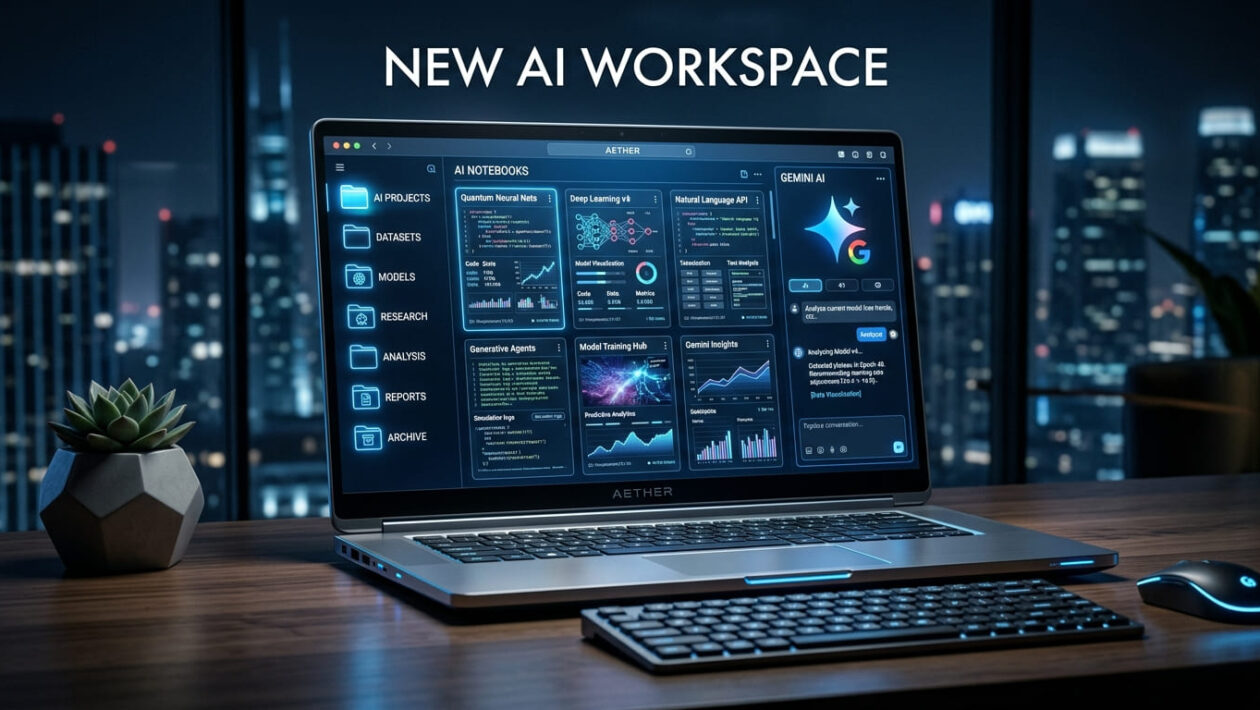
Google is rolling out a new “Notebooks” feature in Gemini that lets users organize chats, files, and instructions into structured AI workspaces. This helps maintain context across long-term projects like research and planning. The update pushes Gemini toward becoming a more persistent and productivity-focused AI assistant.
Google is introducing a new feature in its Gemini AI platform designed to make managing information and ongoing projects far easier. Called “notebooks,” the update allows users to organize conversations, files, and instructions into a single, structured workspace.
A Central Hub for AI-Powered Projects
The notebooks feature acts as a dedicated space where users can group related materials around a specific topic or task. Instead of starting fresh with every prompt, users can store previous chats, upload documents, and add custom instructions that Gemini can reference over time.
This effectively turns Gemini into a more context-aware assistant, capable of delivering responses based on accumulated knowledge rather than isolated inputs.
Built for Long-Term Context and Productivity
One of the key advantages of notebooks is continuity. By keeping relevant information in one place, users no longer need to repeat details across multiple sessions. This makes the AI more efficient for extended tasks like research, planning, or content creation.
The feature is also designed to support more complex workflows, allowing users to combine multiple sources, such as documents and prior conversations into a single reference point.
Integration With NotebookLM
Google is also strengthening the connection between Gemini and its research-focused tool, NotebookLM. Content added to a notebook can sync across both platforms, enabling users to switch between tools without losing context.
This integration allows users to take advantage of different capabilities in each system while maintaining a consistent knowledge base.
Rolling Out to Paid Users First
The notebooks feature is initially being released to subscribers on higher-tier plans, with access starting on the web. Broader availability—including mobile and potentially free users—is expected to follow.
This staged rollout reflects Google’s ongoing strategy of gradually expanding advanced AI features while refining their performance.
Moving Toward a More Persistent AI Assistant
With notebooks, Gemini is evolving from a simple question-and-answer tool into a more persistent digital assistant. By retaining context and organizing user inputs over time, the platform becomes more capable of supporting real-world tasks and long-term projects.
The update signals a broader shift in AI development, toward systems that not only respond quickly, but also remember, organize, and adapt to users’ ongoing needs.