

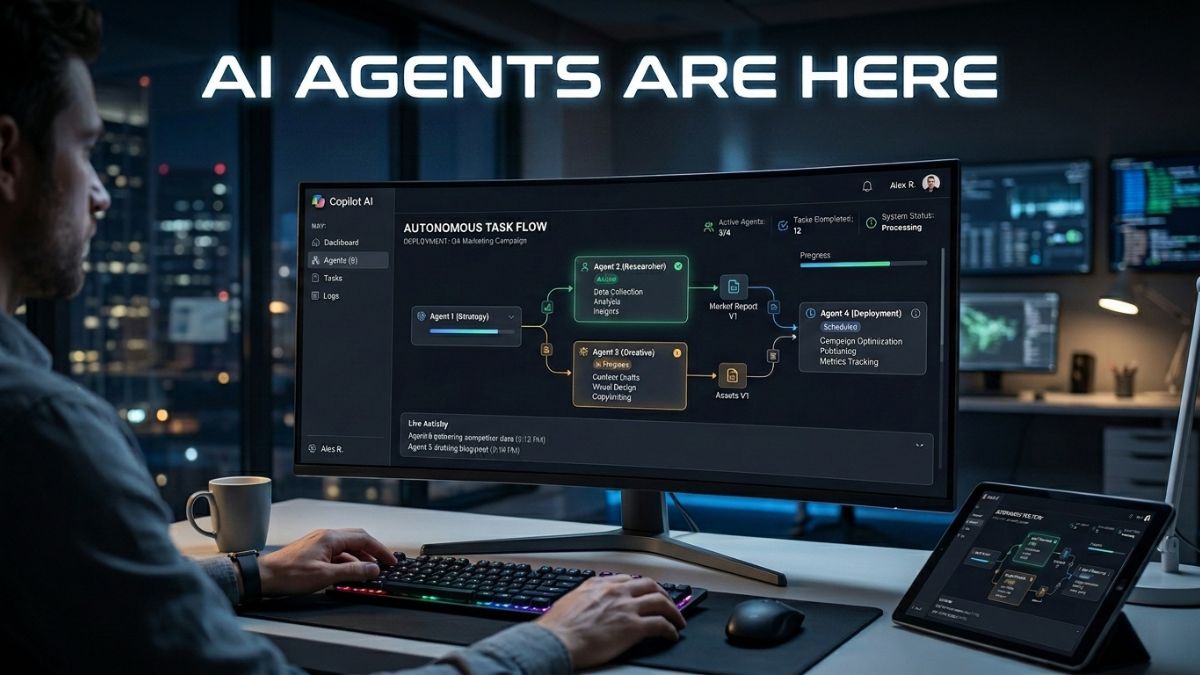
Microsoft is expanding Copilot into AI agents inspired by OpenClaw, enabling autonomous task execution across apps. The move signals a shift from reactive assistants to proactive systems that can manage workflows, monitor data, and act on behalf of users in enterprise environments.
AI development is shifting from chat-based assistants to autonomous agents capable of performing tasks independently. These systems can monitor environments, make decisions, and execute workflows without constant user input, marking a major evolution in how AI is used in business and productivity tools.
At the same time, companies are racing to build agent-based ecosystems that go beyond simple prompts. This shift reflects growing demand for automation, efficiency, and continuous task execution in enterprise environments.
What is Microsoft building with OpenClaw-style AI agents?
Microsoft is transforming Copilot into a platform of AI agents that can operate autonomously, handling tasks without requiring constant user prompts.
These agents are designed to monitor workflows, manage emails, schedule tasks, and generate outputs continuously. Instead of waiting for instructions, they can act proactively based on context, making them more similar to digital workers than traditional assistants.
This marks a transition from reactive AI tools to systems capable of independent action within business environments.
How do these AI agents differ from traditional Copilot features?
Traditional Copilot features respond to user prompts, while AI agents can operate independently, making decisions and executing tasks over time.
According to Microsoft (2026), AI agents are systems that observe data, interpret inputs, and act toward specific goals, enabling automation of repetitive tasks and decision-making processes.
This allows agents to handle ongoing workflows such as inbox monitoring, data analysis, and scheduling without repeated user interaction.
Why is Microsoft adopting an OpenClaw-inspired approach?
Microsoft is adopting this model to compete in the emerging AI agent race, where autonomous systems are becoming the next major platform shift.
According to AI Business (2026), Microsoft is evolving Copilot into a broader ecosystem of agentic AI products aimed at enterprise users.
OpenClaw, an open-source framework for autonomous agents, has accelerated this shift by demonstrating how AI systems can operate continuously and independently, influencing major companies to adopt similar approaches.
What are the risks and challenges of AI agents?
AI agents introduce new risks because they operate with greater autonomy and access to systems, increasing potential security and control challenges.
Unlike traditional tools, these systems can execute actions, access data, and interact with multiple services, which expands the potential attack surface. Security experts warn that improper safeguards could lead to data exposure or unintended actions, making governance and oversight critical as adoption grows.
What happens next?
Microsoft is expected to expand Copilot’s AI agent capabilities throughout 2026, particularly in enterprise tools like Microsoft 365. As competition intensifies, companies including OpenAI and Google are likely to accelerate their own agent-based platforms, signaling a broader industry shift toward autonomous AI systems as the next phase of productivity software.