
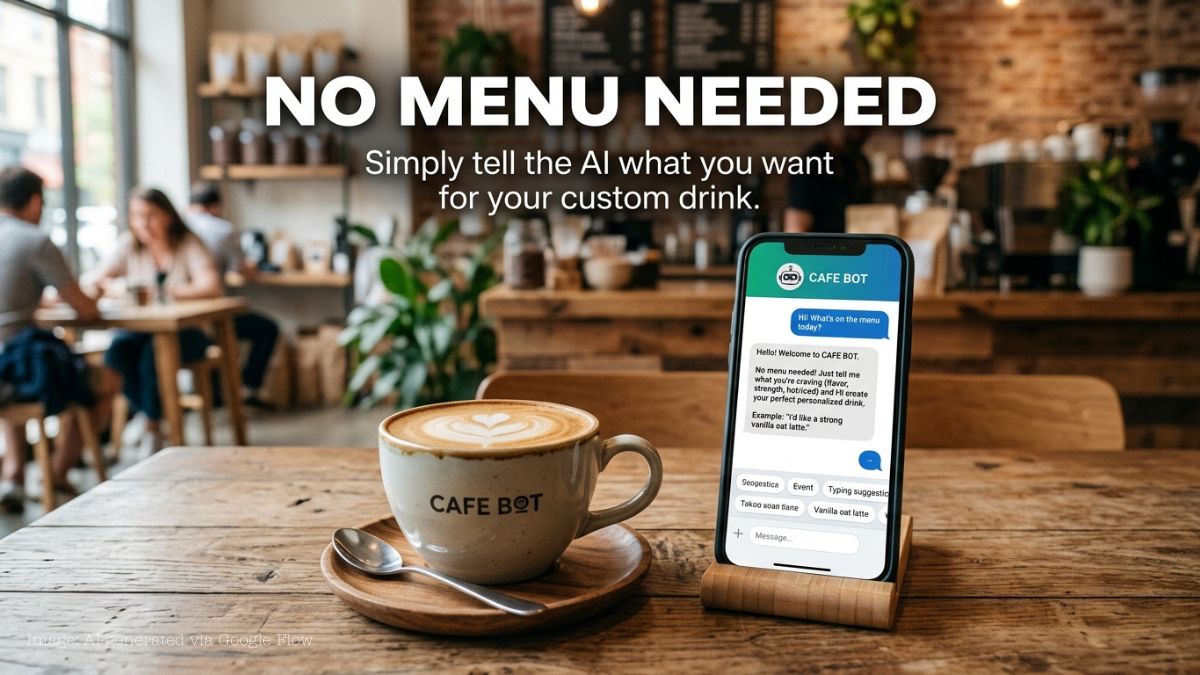
Starbucks launched a ChatGPT-powered tool in April 2026 that recommends drinks based on user prompts, moods, or photos. The feature allows customers to discover, customize, and begin orders through AI, reflecting a shift toward conversational, personalized ordering experiences.
The food and beverage industry is increasingly adopting AI to improve personalization and streamline customer experiences. Instead of relying on static menus, companies are experimenting with systems that interpret user intent, preferences, and context in real time.
At the same time, consumer behavior is shifting toward conversational interfaces, where users describe what they want rather than selecting from predefined options. This change is driving the rise of AI-powered recommendation systems that can translate vague inputs—like mood or cravings—into specific product suggestions.
What is Starbucks’ ChatGPT drink ordering tool?
Starbucks’ ChatGPT tool is a conversational AI feature that recommends drinks based on user prompts, moods, or images instead of traditional menu selection.
Users can type requests like “something refreshing” or upload a photo representing their mood, and the AI suggests drinks that match. The experience removes the need to know menu items, turning discovery into a more intuitive, personalized process.
How does the AI-powered ordering experience work?
The tool allows users to explore drink recommendations inside ChatGPT, customize their selection, and then complete the order through Starbucks’ app or website.
Once a suggestion is generated, users can modify ingredients, choose a store location, and proceed to checkout. This creates a seamless flow from discovery to purchase, combining AI interaction with existing ordering systems.
According to Starbucks (2026), the feature launched on April 15 as a beta app within ChatGPT, allowing users to “describe your mood or share a photo” to receive personalized drink suggestions.
Why is Starbucks using AI for drink recommendations?
Starbucks is using AI to match how customers actually think—starting with feelings rather than menu choices.
Executives say customers increasingly describe what they want in terms of mood or experience instead of specific drinks. The AI tool is designed to meet users at that moment, translating vague preferences into actionable recommendations.
Reporting shows users can request drinks based on prompts like “an afternoon boost” or even upload outfit photos to guide suggestions, highlighting a shift toward highly personalized, context-driven ordering.
What does this mean for the future of ordering and AI commerce?
The launch signals a broader move toward “agentic commerce,” where AI systems actively guide purchasing decisions instead of simply presenting options.
As conversational AI becomes more integrated into shopping experiences, users may rely less on browsing menus and more on describing needs. This could reshape digital commerce, with AI acting as an intermediary between intent and transaction.
What happens next?
Starbucks is expected to expand the ChatGPT integration beyond its current beta in 2026, potentially adding more advanced personalization and deeper ordering capabilities. As adoption grows, other restaurant and retail brands are likely to introduce similar AI-driven tools, accelerating the shift toward conversational and automated commerce experiences.
To see how AI is transforming search and discovery beyond food ordering, read “HubSpot Launches AEO Tool to Boost AI Search Visibility”. It explains how businesses are optimizing content to appear in AI-generated answers.