
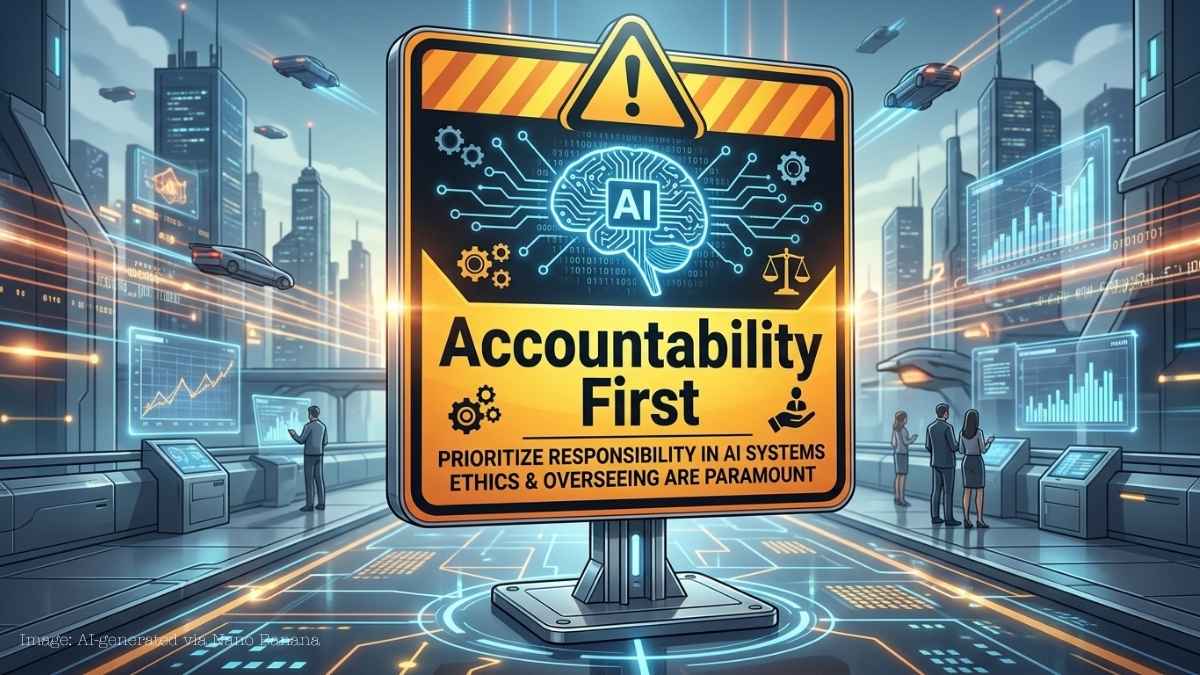
AI accountability is now the top requirement for enterprises adopting new AI tools in 2026, according to a new industry survey. Companies are prioritizing transparency, governance, and risk control as they scale AI deployments across business operations.
Enterprises are rapidly integrating AI into core operations, from customer service to data analytics. However, this expansion has introduced new risks related to accuracy, bias, and compliance.
As a result, organizations are placing greater emphasis on governance frameworks to ensure AI systems operate reliably and responsibly. This shift reflects growing regulatory pressure and the need to build trust in AI-driven decision-making.
Why is AI accountability the top priority for enterprises?
AI accountability is the top priority because businesses need to ensure AI systems are transparent, reliable, and compliant with regulations.
Companies want clear visibility into how AI models make decisions, especially when those decisions impact customers or operations. Without accountability, organizations risk errors, legal exposure, and loss of trust.
As reported by GlobeNewswire (2026), enterprise leaders ranked accountability, transparency, and governance as the most critical requirements when selecting new AI tools.
What challenges are companies facing with AI adoption?
Organizations are struggling with issues such as model transparency, bias, and integration into existing systems.
Many AI tools operate as “black boxes,” making it difficult for businesses to understand or explain how decisions are made. This creates challenges in regulated industries where explainability is required.
How are enterprises addressing AI governance?
Companies are implementing governance frameworks that include monitoring, auditing, and human oversight of AI systems.
These frameworks help ensure AI outputs are accurate, ethical, and aligned with business objectives. They also support compliance with emerging regulations around AI use.
These frameworks help ensure AI outputs are accurate, ethical, and aligned with business objectives. As reported by GlobeNewswire (2026), enterprise leaders are increasingly prioritizing accountability, transparency, and control as core requirements when deploying AI tools, reflecting a growing need for structured governance.
What does this mean for the future of enterprise AI?
The focus on accountability signals a shift from rapid AI adoption to responsible and controlled deployment.
Enterprises are moving beyond experimentation toward scalable AI systems that require strong governance. This trend is expected to shape how AI tools are developed, evaluated, and deployed in the coming years.
What happens next?
Enterprises are expected to increase investment in AI governance tools and frameworks throughout 2026, with a focus on transparency and compliance. Vendors will likely respond by building more explainable and controllable AI systems to meet enterprise requirements.
To see how companies are building secure AI systems, read “Expel Launches AI Security Framework for Threat Response”. It explains how organizations are balancing automation with human oversight in cybersecurity.