
DappOS introduced xBubble, an AI agent designed to learn user behavior and automate digital tasks across Web3 and online platforms. The system aims to personalize AI assistance over time by adapting to individual habits and workflows.
AI agents are increasingly evolving beyond simple assistants into systems capable of learning user preferences and automating complex tasks. Companies developing agentic AI platforms are focusing on persistent memory, adaptive behavior, and personalized workflow optimization.
At the same time, Web3 platforms are exploring AI integration to simplify decentralized applications, reduce manual interactions, and improve user accessibility across blockchain ecosystems.
What is xBubble?
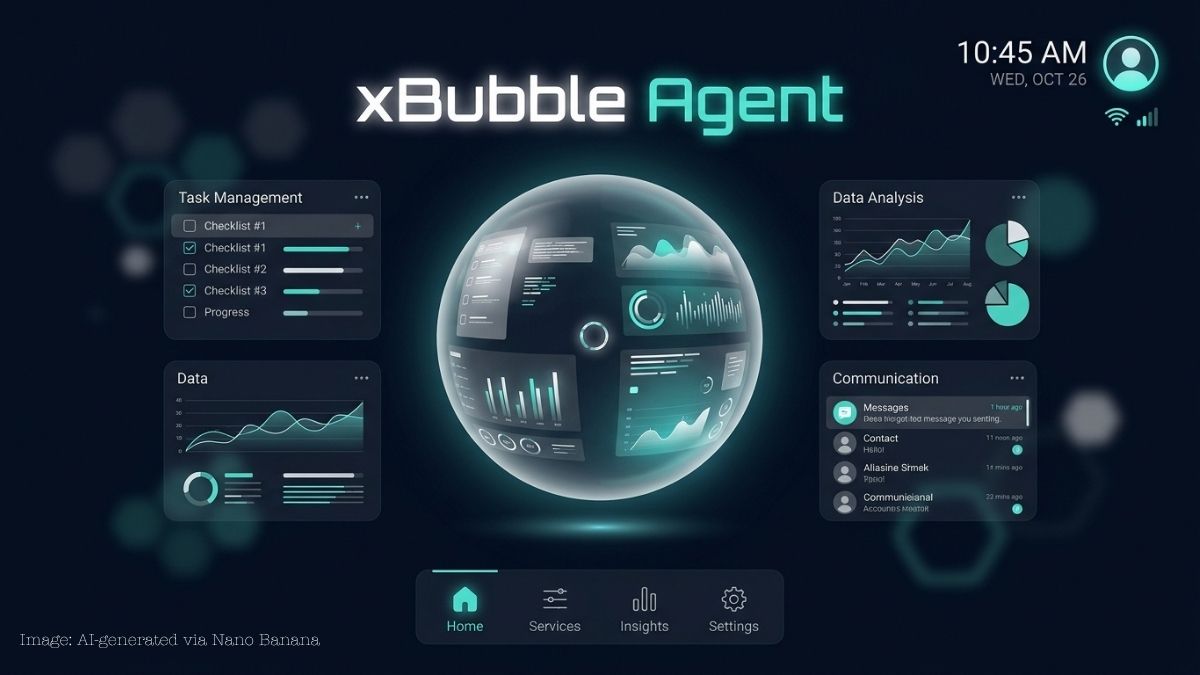
xBubble is an AI agent developed by DappOS that learns from user behavior and automates tasks across digital environments.
The system is designed to observe workflows, remember preferences, and perform repetitive actions on behalf of users. DappOS says the agent can adapt over time, creating more personalized interactions the longer it is used.
The company describes xBubble as an AI assistant that “learns and uses AI for you,” focusing on automation and personalization within Web3 ecosystems.
How does the AI agent improve over time?
xBubble uses memory and behavioral learning to refine task execution and recommendations.
Instead of relying solely on static prompts, the system builds contextual understanding through repeated interactions. This allows the AI agent to automate workflows more efficiently and tailor responses to individual users.
The approach reflects a broader trend toward persistent AI systems capable of adapting dynamically to user behavior.
Why are personalized AI agents gaining popularity?
Personalized AI agents are attracting attention because they reduce repetitive tasks and improve productivity.
Unlike traditional assistants that respond only to direct commands, adaptive AI systems can anticipate user needs and automate routine workflows. This makes them increasingly valuable for productivity, finance, research, and Web3 applications.
The rise of agentic AI has accelerated as companies compete to create systems capable of acting independently while maintaining long-term contextual memory.
What challenges could AI agents face in Web3 environments?
AI agents operating in decentralized systems face concerns around privacy, security, and autonomous decision-making.
Because these agents may interact with wallets, transactions, or personal data, developers need safeguards to prevent unauthorized actions or security vulnerabilities. Transparency and user control remain critical as autonomous AI systems become more capable.
Industry observers also note that trust and reliability will play a major role in determining adoption across blockchain ecosystems.
What happens next?
DappOS is expected to continue expanding xBubble’s capabilities throughout 2026 with additional integrations, automation features, and personalized AI workflows. As agentic AI adoption grows, similar adaptive assistants are likely to become more common across Web3 and mainstream productivity platforms.
To see how autonomous AI systems are evolving, read “Nous Research Launches Hermes Agent for Self-Improving AI Workflows”. The article explores how AI agents are learning from memory and optimizing tasks over time.