
A new AI platform called Hermes Agent is introducing self-improving AI tools designed to refine workflows and optimize task execution over time. The system aims to automate repetitive processes while continuously improving performance through iterative learning.
AI agents are evolving from simple assistants into autonomous systems capable of handling multi-step workflows, tool usage, and persistent memory. Developers are increasingly focusing on “agentic AI,” where systems can adapt and improve through repeated usage rather than relying solely on static programming.
This shift is driving interest in open-source AI agents that can run independently on private infrastructure while continuously refining their capabilities over time
What is Hermes Agent?
Hermes Agent is an open-source autonomous AI framework developed by Nous Research.
Unlike traditional chatbots or coding copilots, Hermes Agent is designed to persist across sessions, remember previous interactions, and create reusable “skills” based on completed tasks. The system can run locally or on cloud infrastructure while integrating with messaging platforms and external tools.
The official Hermes Agent documentation describes the platform as “the AI agent that grows with you,” emphasizing its persistent memory and self-improving workflow capabilities.
How do the self-improving AI tools work?
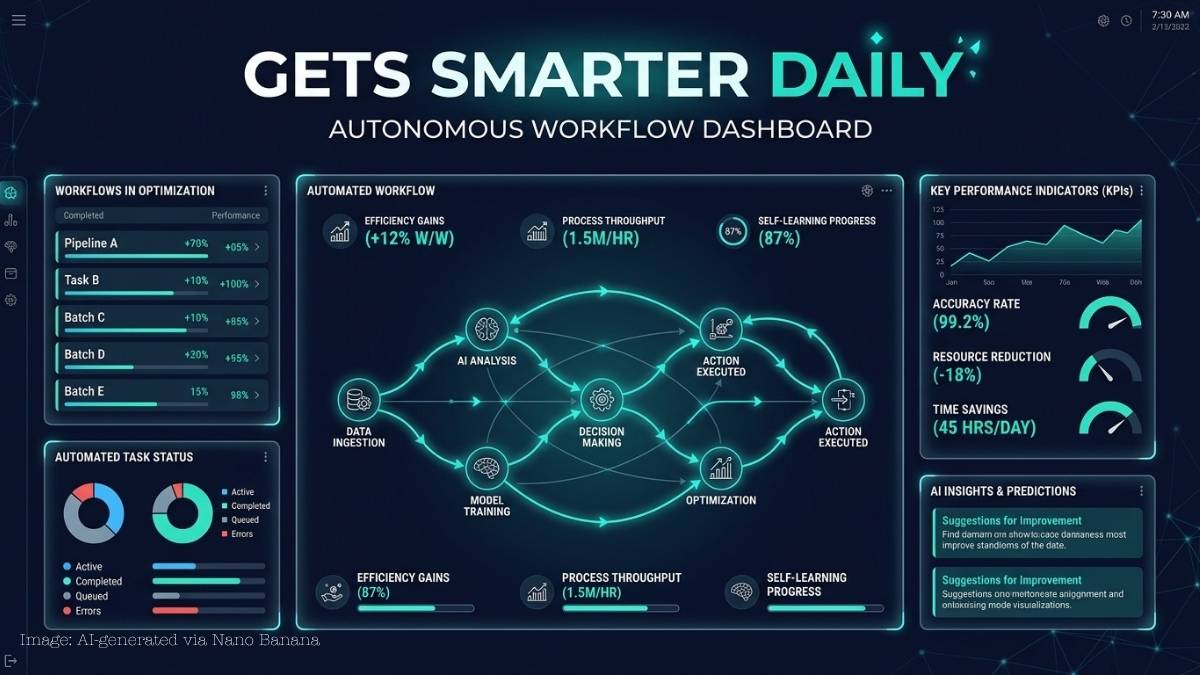
Hermes Agent uses a built-in learning loop that analyzes successful tasks and converts them into reusable skills.
These skills can then be refined automatically during future operations, allowing the system to improve workflows without requiring constant human reprogramming. The framework also stores long-term contextual memory to reduce repetitive inputs from users.
Documentation published by Hermes Agent explains that the system “creates skills from experience” and improves them over time through iterative feedback and memory optimization.
Why are autonomous AI agents gaining attention?
Autonomous AI agents are gaining traction because they can perform more complex tasks than standard AI assistants.
Instead of responding to single prompts, agentic systems can manage multi-step operations, execute tools, retrieve external information, and adapt workflows dynamically. This makes them attractive for coding, automation, research, and enterprise productivity.
Discussions across developer communities show growing interest in self-hosted AI agents that provide persistent memory and workflow automation without depending entirely on proprietary cloud platforms.
What challenges do self-improving AI systems face?
Despite growing interest, self-improving AI systems still face concerns around reliability, transparency, and memory drift.
Experts warn that autonomous learning loops can accumulate incorrect information or inefficient workflows if safeguards are not implemented. Developers are therefore focusing on skill curation, scoring systems, and controlled memory management.
Recent Hermes Agent updates introduced an “Autonomous Curator” designed to prune low-quality skills and optimize stored workflows automatically.
What happens next?
Nous Research is expected to continue expanding Hermes Agent throughout 2026 with additional integrations, workflow automation tools, and memory optimization features. As agentic AI adoption grows, self-improving systems could become increasingly common across enterprise and developer environments.
To see how AI automation frameworks are being used in cybersecurity, read “Expel Launches AI Security Framework for Threat Response”. The article explains how organizations are balancing AI automation with oversight and governance.