
Last Updated on May 14, 2026 by Spencer Lee
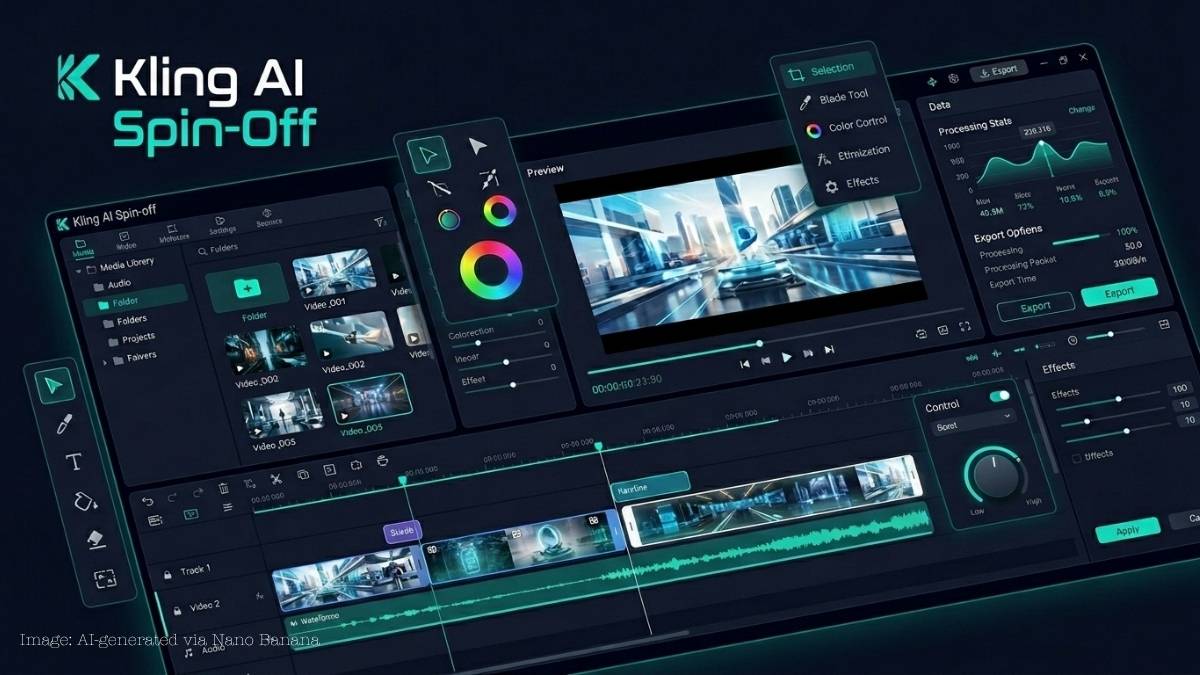
Kuaishou Technology is reportedly considering spinning off its Kling AI video-generation unit in a deal that could value the business at up to $20 billion. The move highlights growing investor demand for AI video platforms as competition intensifies across China’s generative AI market.
AI-generated video has become one of the fastest-growing sectors in generative AI, with companies racing to develop tools capable of producing cinematic-quality content from text prompts and images.
Chinese tech firms are increasingly competing with global AI leaders by launching multimodal systems that combine video, audio, image generation, and editing into unified platforms. Investor interest has also surged as AI startups seek funding and potential public listings.
Why is Kuaishou considering a Kling AI spin-off?
Kuaishou is exploring outside investment and a possible spin-off for Kling AI as the company looks to capitalize on strong investor demand for generative AI businesses.
Reports indicate the company is discussing a funding round that could raise approximately $2 billion while valuing Kling AI near $20 billion. A Hong Kong IPO is also reportedly being considered for 2027.
The company confirmed it is reviewing a restructuring proposal that may involve external financing for Kling AI.
What is Kling AI?
Kling AI is Kuaishou’s video-generation platform that competes with tools from OpenAI, Runway, Google, and ByteDance.
The platform allows users to generate and edit videos using AI-powered multimodal systems. Kling has gained attention for rapid feature updates, improved character consistency, and integrated audio-video generation capabilities.
Kuaishou stated in January 2026 that Kling AI surpassed a $240 million annualized revenue run rate and served more than 60 million creators globally.
Why is Kling AI attracting investor attention?
Investors are focusing on Kling AI because of its rapid revenue growth and expanding global adoption.
Reports suggest Kling’s annualized revenue run rate may have climbed to nearly $500 million by May 2026, reflecting strong commercialization of AI video tools across marketing, entertainment, ecommerce, and gaming sectors.
Community discussions across AI forums also highlight Kling’s fast iteration cycle and aggressive rollout of multimodal video features compared to competing platforms.
What does this mean for the AI video market?
The potential spin-off signals growing confidence in AI video generation as a standalone business category.
Companies developing video-generation models are rapidly expanding beyond experimental tools into enterprise and creator-focused platforms with recurring subscription revenue. This has intensified competition among Chinese and Western AI companies.
Industry observers expect AI video systems to become a major battleground for generative AI over the next several years, particularly as multimodal content creation becomes more mainstream.
What happens next?
Kuaishou Technology is expected to continue evaluating financing and restructuring options for Kling AI throughout 2026. If the spin-off proceeds, Kling could become one of the highest-valued standalone AI video companies globally, potentially accelerating competition in the generative video market.
To see how AI agents and automation systems are evolving alongside generative media tools, read “Nous Research Launches Hermes Agent for Self-Improving AI Workflows”.