

Last Updated on June 2, 2026 by Spencer Lee
IPTechView has introduced Virtual Shift Lead AI, a new artificial intelligence platform designed to help quick-service restaurants (QSRs) and retail franchises improve labor efficiency and profitability. The system provides real-time operational guidance, workforce recommendations, and performance insights aimed at helping frontline managers make better decisions.
Labor shortages, rising wages, and tightening profit margins continue to challenge restaurant and retail operators worldwide. Franchise businesses, in particular, face pressure to maintain consistent service quality while controlling labor costs across multiple locations.
As a result, many operators are adopting AI-powered management tools that can analyze business data, automate routine tasks, and provide operational recommendations in real time.
What is Virtual Shift Lead AI?
Virtual Shift Lead AI is an AI-powered operational assistant developed for franchise businesses in the restaurant and retail sectors.
The platform analyzes workforce data, sales performance, customer demand, and operational metrics to provide recommendations that support day-to-day management decisions. The goal is to help store managers optimize staffing levels, improve efficiency, and respond more quickly to changing business conditions.
IPTechView says the system acts as a digital shift supervisor, delivering actionable insights throughout the workday.
How does the AI platform help franchise operators?
The system is designed to identify operational opportunities that might otherwise go unnoticed.
By continuously monitoring performance data, Virtual Shift Lead AI can recommend staffing adjustments, flag productivity issues, and highlight areas where labor costs may be affecting profitability. The platform can also assist with scheduling decisions and operational planning.
For franchise operators managing multiple locations, centralized visibility into workforce performance can help improve consistency and decision-making across the organization.
Why are restaurants and retailers investing in AI management tools?
Businesses are increasingly turning to AI because traditional reporting systems often require managers to manually interpret large amounts of data.
AI platforms can automate analysis and deliver recommendations immediately, allowing managers to focus more on customer service and operational execution. In industries with thin profit margins, even small improvements in staffing efficiency can significantly impact financial performance.
Industry observers expect labor optimization and predictive workforce management to become major growth areas for AI adoption over the next several years.
Could AI become a standard management tool?
Many technology providers believe AI assistants will eventually become a common part of business operations.
Rather than replacing managers, these systems are generally positioned as decision-support tools that help employees make more informed choices. AI can process operational data at a scale that would be difficult for human managers to replicate manually.
As AI capabilities continue improving, businesses may increasingly adopt digital assistants for scheduling, forecasting, inventory management, customer engagement, and performance monitoring.
What happens next?
IPTechView plans to expand adoption of Virtual Shift Lead AI among franchise operators as businesses seek new ways to improve efficiency and profitability. Analysts expect competition in the AI-powered workforce management market to intensify as more vendors introduce similar solutions.
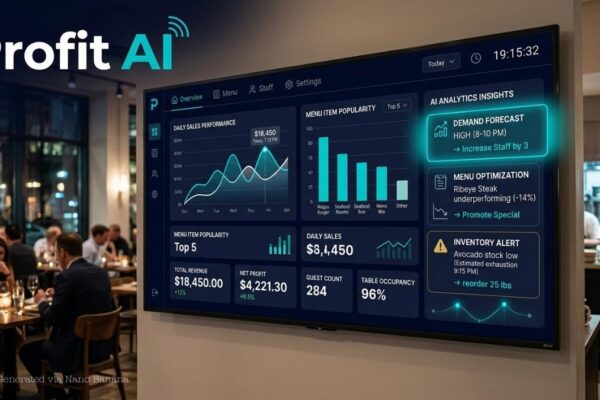
To see how AI is helping hospitality businesses improve operational performance, read “SpotOn Launches Profit AI for Restaurants”. The article explores how AI-powered analytics platforms are helping restaurant owners uncover opportunities to increase profitability.