
Google and Kaggle launched a free five-day AI agents course in June 2026 focused on “vibe coding.” The program teaches developers how to build AI-powered applications using natural language workflows instead of traditional programming methods.
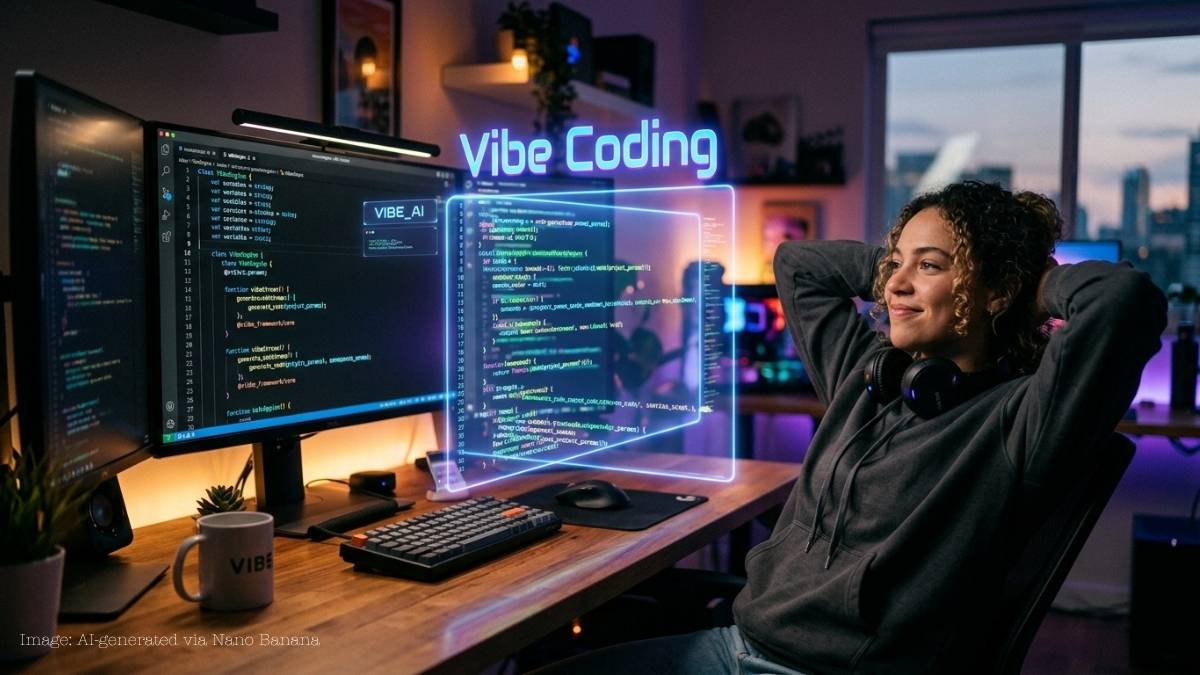
AI development is shifting toward tools that allow users to create applications using natural language instead of writing code manually. This approach, known as “vibe coding,” is gaining traction as AI systems become more capable of generating and executing code.
The trend is part of a broader movement toward agentic AI, where systems can plan, build, and execute tasks autonomously. As demand grows, companies are investing in education and training programs to help developers adapt to these new workflows.
What is Google and Kaggle’s AI agents course?
Google and Kaggle launched a free five-day online course designed to teach developers how to build AI agents using natural language.
The program runs from June 15 to June 19, 2026, and includes hands-on projects, expert sessions, and a final capstone assignment. It focuses on creating production-ready AI systems rather than basic tutorials.
As reported by Google (2026), the course is designed to help developers “build production-ready AI agents” using modern tools and workflows.
What is “vibe coding” and why is it important?
Vibe coding is a development approach where users describe what they want in natural language, and AI generates the code.
This method allows developers—and even non-programmers—to build applications faster without deep knowledge of programming languages. It represents a shift toward more accessible and intuitive software development.
Data from KDnuggets (2026) shows the course covers key areas such as AI agents, embeddings, and MLOps through hands-on labs and real-world projects.
Why is Google focusing on AI education now?
Google is investing in AI education to accelerate adoption and build a larger developer ecosystem.
By training developers to use AI tools effectively, the company can drive usage of its platforms and services. This also helps organizations adopt AI faster by reducing skill barriers.
What impact could this have on software development?
The course reflects a broader shift toward AI-driven development, where coding becomes more accessible and automated.
As more developers adopt vibe coding, software creation could become faster and more inclusive. However, it may also introduce challenges related to code quality, security, and oversight.
What happens next?
Google and Kaggle are expected to expand similar training programs throughout 2026 as demand for AI skills grows. Future courses will likely include more advanced agent development, enterprise use cases, and deeper integrations with Google’s AI tools.
To see how AI tools are evolving alongside developer workflows, read “Google Unveils TPU v8 Chips for Agentic AI Era”. It explains how new infrastructure is powering advanced AI systems.